Mindless Eating
Nov 24, 2006 - 9:51:04 AM
, Reviewed by: Rashmi Yadav
|
|
|
"A large bag of corn chips in front of us means we will consume more; so why don't we try smaller bags."
|
By Cornell Food & Brand Lab,
[RxPG]
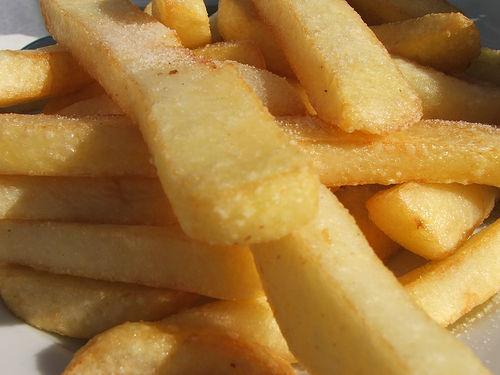 |
| Some 95 percent of those who lose weight on a well-meaning but short-lived diet soon gain it back. |
Mindless Eating may be the most nourishing book you read all year. It is full of tasty morsels dipped in a rich, creamy, sometimes sarcastic sauce of humor, spiced with common sense and reachable goals.
The author of this Bantam Books banquet, Brian Wansink, is director of the Cornell University Food and Brand Laboratory. He also is an eater, he readily admits--of everything from French fries to fine French cuisine. He is as apt to give in to the lures of the palate as the next guy. But unlike the next guy, his years of research at Cornell, and at a similar University of Illinois lab he founded earlier, gave him some clues to ways we can continue to munch and still lose weight.
Unlike the typical "diet book," his volume has a healthy serving of sanity. On his way to getting a Ph.D. at Stanford and lecturing worldwide, he admits to having yielded to temptation as his TKE fraternity brothers at Wayne State College in Nebraska watched him down the usual undergraduate servings of noodles, beer, snacks, or anything free put in front of his mouth. Many of his experiments involve graduate students, always ready to stuff themselves in the name of science.
From them, and other researchers whom he credits often,, he has learned that we are influenced by the size of plates (they are larger today, so we think we have to fill them up). Packages make a difference, too. A large bag of corn chips in front of us means we will consume more; so why don't we try smaller bags" We may not eat much of the fried chicken in an ordinary restaurant, he suggests, but make it a place with reservations, a tablecloth, background music and a menu title like "Grandma's Special Recipe Southern-Style Chicken a la Brian" and we will fall for it like a ton of Twinkies. We tend to eat more than we think we do, he says, thanks to larger portions, packaging, advertising and fancy names.
Price plays a role, too. As an impovershed student, he once tried to convince a date that he had bought a bottle of fine wine for their picnic. All he did was have the liquor store clerk switch pricetags, so the poor girl thought she was drinking a $9.50 bottle of good stuff from Normandy instead of some $2 gem called "Night Train Express".
One food expert called Wansink the "Sherlock Holmes of Food" because of his sneaky, scientific investigative skills. Another observer, Robin Jenkins of the Chicago Tribune, termed him "the wizard of why" because of his ability to answer so many food questions. The U.S. government called him to test foods that soldiers eat and how they should be packaged.
Some 95 percent of those who lose weight on a well-meaning but short-lived diet soon gain it back, Wansink says; deprivation diets simply do not work. His advice: eat smaller portions; don't fall for all of the advertising you see or hear; don't be so impressed by the "low calorie" claims of an item that you think you can safely eat three more bags than you normally would. Find smaller dishes and containers; when you are finished or can see the end is near, you are more likely to stop. In one creative experiment the Cornell guru devised a "bottomless soup bowl" for his unsuspecting student guinea pigs. One group ate from a contraption tied to tubes under the table, which refilled itself constantly. But another group that got its soup from a conventional bowl saw the bottom and recognized that they should stop. We do not stop eating when we are "filled up," Wansink has found; if more food is put in front of us, we will put it down the hatch.
In the name of science, he has had grad students to his home to party. On one occasion, the snacks were in one or two large bowls. The students snarfed them down quickly. The next night, the goodies were in fewer, smaller bowls, in different rooms. Consumption dropped dramatically.
His adventures with Buffalo wings, popcorn, M&Ms, glasses full of Scotch or a good Bordeaux and big burgers are accompanied by a side dish (the appendix) which compares popular diets. It offers sage advice on how to time our eating, resist culinary lures and Madison Avenue, and still enjoy food without fear of fatness. People eat with their eyes, not with their stomachs, he has told interviewers...and those pesky other senses influence our decisions also. We think we eat just enough to satisfy basic hunger, but we are being fooled all the time. (We even tend to eat more when we are with people we like.)
If you want something that tastes good and reads well, pick up Mindless Eating and laugh while you slowly lose weight. Tighten your belt; read the clues to happy health with which the volume is lightly seasoned. WARNING: You will want to consume large portions of this book at one sitting.
Advertise in this space for $10 per month.
Contact us today.
|
 |
Related Food & Nutrition News
|
|
Subscribe to Food & Nutrition Newsletter
|
|
|
|
Feedback
|
For any corrections of factual information, to contact the editors or to send
any medical news or health news press releases, use
feedback form
|
Top of Page
|



